Youth group management software should help ministry teams do something deeply practical: know who is present, notice who is becoming disconnected, support volunteer leaders and follow up with young people responsibly.
Youth ministry brings together relationships, events, small groups, parents or carers, attendance, pastoral care and safeguarding responsibilities. No single app makes those responsibilities disappear. The right software can, however, make important signals easier to see and routine actions easier to complete.
The best starting point is not a long feature list. It is a clear understanding of what your youth ministry needs the software to do, what must remain in formal safeguarding processes and which workflows your leaders will realistically use every week.
What does youth group management software usually cover?
The category includes several different kinds of product. Some platforms are complete church management systems. Others focus on child check-in, event registration, communication, discipleship or leader care. Products may use the same phrase while solving different problems.
Common youth ministry needs include:
- young person and household records;
- parent or carer contact details;
- event registration and permission forms;
- secure check-in and check-out;
- attendance tracking;
- small group and leader assignments;
- communication with parents, carers or young people;
- pastoral follow-up and care notes;
- volunteer scheduling and training records;
- reporting for youth pastors and church leadership.
Very few churches need every function from one product. Your goal is to identify the critical workflows and decide whether one system or a connected set of systems is the safer, simpler choice.
Attendance is useful when it helps someone notice
Youth attendance is more than a weekly number. A pattern may show that a young person has stopped connecting, moved between groups or returned after a long absence. It may also simply reflect school commitments, family travel, exams, illness or a change in routine.
Good youth attendance tracking gives leaders context without making assumptions. It should help answer:
- Who was expected and who attended?
- Who has missed several gatherings?
- Which small group and leader are responsible for appropriate follow-up?
- Are attendance records being completed consistently?
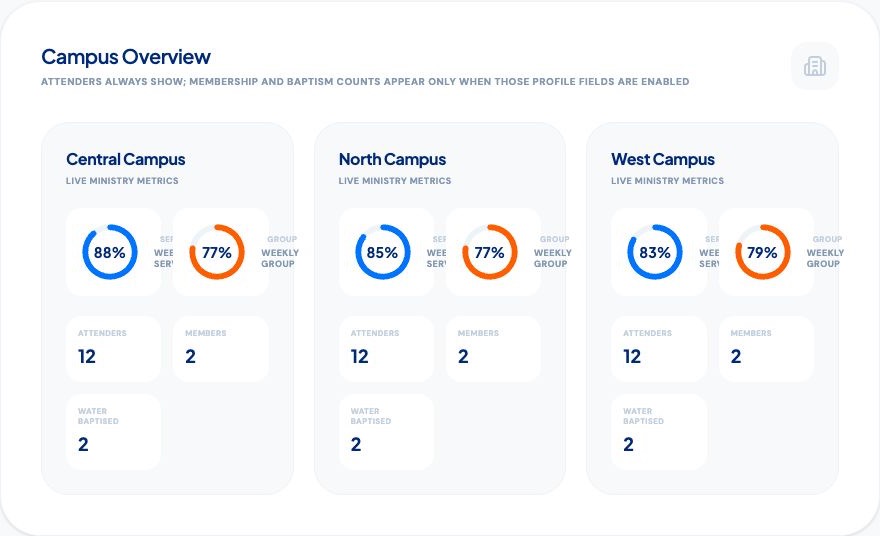
- Are changes visible across weeks, terms and campuses?
The point is to support a thoughtful conversation. Explore how My12 approaches church attendance tracking as a care signal rather than a verdict.
Volunteer youth leaders need a simple daily view
Youth ministries often depend on volunteers. Those leaders may only need a focused view of the young people and tasks entrusted to them. Giving every volunteer access to a large administrative system can create confusion and unnecessary data exposure.
A leader-facing experience should make common actions obvious: see the group, record attendance, remember a follow-up, note an appropriate care interaction and raise a concern through the correct route. It should work well on a phone and should not require a volunteer to understand the entire church database.
During a software trial, ask several real volunteers to complete these actions without coaching. Their experience is often more valuable than an administrator-only demonstration.
Safeguarding is a process, not a software badge
Youth ministry software must sit inside the church's safeguarding policy. A database cannot replace trained safeguarding leads, reporting procedures, safer recruitment, supervision, consent or emergency action.
Before adopting a platform, decide exactly where safeguarding concerns are reported and who can see them. Avoid using ordinary prayer fields, general group notes or informal messages for information that belongs in a restricted safeguarding process.
Ask providers about role-based access, account security, auditability, data retention and how records can be exported or deleted. Then document how your church will use the tool. Software is safest when both the technical permissions and the ministry process are clear.
Be careful with pastoral notes about young people
Pastoral context can help leaders care consistently, but collecting too much information creates risk. Store only what is necessary, accurate and appropriate for the purpose. Avoid speculative labels, unnecessary detail and sensitive information that does not belong in a general care record.
Permissions should follow responsibility. A small group leader may need to know that a young person requires an appropriate follow-up, while a youth pastor or safeguarding lead may hold more restricted context elsewhere. Not every caring leader needs access to every detail.
Churches should also be clear about privacy information, parent or carer expectations, retention periods and applicable data protection law. My12 publishes its approach in the My12 Privacy Policy, but each church remains responsible for its own ministry practices and lawful use of data.
Separate child check-in from discipleship follow-up when needed
Secure child check-in and pastoral follow-up are related, but they are not the same workflow. Check-in may require labels, authorised collection, room capacity, allergy information and strict handover procedures. Discipleship follow-up may focus on attendance patterns, leader contact, prayer and ongoing care.
If a product is strong in one area but not the other, using connected tools can be wiser than forcing one system to do everything. My12 is a care, discipleship and leader-support platform. It is not a replacement for dedicated child check-in, medical consent, background-check management or formal safeguarding case management.
That distinction matters. Honest product fit protects both the ministry and the people being served.
Communication needs clear boundaries
Youth ministry communication must follow the church's safeguarding policy and local requirements. The software should support approved communication patterns rather than encourage private, unmonitored contact.
Consider whether communication should go to parents or carers, whether multiple leaders must be included, how consent is recorded and what channels are approved. A platform with powerful messaging is not automatically a safer platform. Governance and visibility matter just as much as convenience.
Support leaders without turning care into surveillance
Youth pastors need to know whether groups are healthy and whether leaders are receiving support. They do not need a system that measures every relationship as a performance score.
Useful leadership signals include missing attendance reports, changes in group rhythm, active care needs, leader feedback and concerns that have been raised. These signals help a youth pastor ask better questions: Is the leader overloaded? Has the group paused? Does someone need pastoral support? Is there a process gap?
My12 is designed around this kind of visibility. It helps senior leaders notice patterns while keeping the response human. Its care alert workflow can support pastoral escalation, but any safeguarding concern should still follow the church's dedicated safeguarding procedure.
Check whether the software fits your existing church systems
Many churches already hold people, groups and campuses in a church management system. Re-entering that structure creates duplicate records and weakens trust in the data.
Ask whether a new platform integrates with your current system, what information moves in each direction and how duplicates are handled. My12 can use a Planning Center connection to bring existing people, group, leader and campus structure into its care workflows.
Integration should reduce administration. Test it with a small set of records and confirm ownership, permissions and update behaviour before a wider rollout.
Questions to ask during a youth software trial
Use realistic scenarios rather than a polished demonstration. Ask your team to test:
- Can a volunteer record attendance quickly on a phone?
- Can a youth pastor see a pattern of repeated absence?
- Can access be limited by role, group and responsibility?
- Can a leader raise a pastoral concern clearly?
- Does the system show who should follow up?
- Can sensitive information be kept out of ordinary leader views?
- Does the product complement your safeguarding process?
- Can your church export its data if needs change?
- Will volunteers still use the workflow after the first month?
Where My12 can support youth ministry
My12 can support youth groups that need a simple rhythm for people, attendance, prayer, care, follow-up, leader reminders and senior leadership visibility. The same people-centred approach used in adult small groups can help youth leaders notice changes and remain consistent.
It is especially relevant when a church already has administrative or check-in systems but needs a clearer church care layer. Leaders can focus on the young people entrusted to them, while youth pastors and organisation leaders see where attention or support may be needed.
My12 does not claim to replace every specialised youth ministry system. Churches that require parental consent forms, secure collection, medical workflows or formal safeguarding case management should keep those functions in dedicated systems and processes.
Choose software that strengthens responsible relationships
The right youth group management software should make good ministry habits easier. Attendance is recorded. Appropriate follow-up happens. Volunteer leaders know what is expected. Senior leaders can support the team. Sensitive information is handled with care. Safeguarding processes remain clear.
Technology cannot create trust between a young person and a leader, but it can help the ministry remember, notice and respond more consistently. That is the standard worth using when you compare youth ministry platforms.