Pastoral care software should help churches remember people, coordinate appropriate follow-up and support leaders in the work of care. It should not encourage churches to collect every personal detail, turn pastoral relationships into performance data or place sensitive information in front of people who do not need it.
The difference matters. Pastoral care includes prayer, encouragement, practical support, hospital visits, bereavement, absence, answered prayer and many ordinary conversations. A useful system gives the right leaders enough context to follow through while protecting the dignity and privacy of the person receiving care.
Before choosing a platform, churches should decide what they are trying to improve. Is follow-up being forgotten? Are care needs scattered across notebooks and messages? Do senior leaders discover concerns too late? Are several leaders unknowingly contacting the same person while someone else receives no follow-up at all?
What is pastoral care software?
Pastoral care software is a shared system for organising appropriate care information and next actions. Depending on the church, it may support people records, contact history, prayer requests, care tasks, reminders, pastoral alerts, visits and leader assignments.
It is different from a general church database. A church management system may answer who belongs to a group, who registered for an event or who is in the directory. A pastoral care platform helps answer a more relational question: who may need care, who is responsible for following up and what appropriate context should that leader know?
My12 approaches this as a care layer. Churches can keep their existing administration system while using My12 to connect leader rhythms, attendance signals, prayer, care actions and pastoral visibility. Explore the My12 pastoral care software page for the product workflow.
Track clear care actions and ownership
A care need is easier to support when someone knows what happens next. Useful records should make ownership clear without reducing care to a ticketing system.
A practical care action might record that a leader should call someone, arrange a visit, check in after an appointment, offer practical help or ask a pastor to make contact. It should include a sensible due date and a completion note when context is helpful.
This prevents good intentions from disappearing into a busy week. It also helps a pastoral team avoid duplicate or conflicting contact. The goal is not to count tasks for performance. It is to make sure promised care actually happens.
Keep prayer requests connected to people
Prayer requests often reveal what matters most in a person's current season. When requests live only in a message thread, leaders may pray sincerely once but lose the opportunity to follow up later.
Pastoral care software can keep a prayer request connected to the person, remind an appropriate leader to pray or follow up and record when the prayer is answered. An answered prayer note can preserve the story without requiring a long report.
Churches should still consider visibility carefully. A prayer request shared with one leader is not automatically permission to distribute it widely. Access and wording should reflect what the person expected when they shared it.
Use attendance as a signal, not a diagnosis
Changes in attendance can help leaders notice that something has changed. Someone may stop attending a group, miss several services or return after a long absence. None of those patterns explains why.
A healthy system combines church attendance tracking with human judgement. One missed week should not create a dramatic label. A repeated pattern, no recent contact and another care signal may justify a thoughtful check-in.
Attendance is most useful when it leads to a relational question: would contact from the right leader be helpful?
Record meaningful life moments with restraint
Pastoral care often continues across years. Baptism, bereavement, joining a group, starting to serve, marriage, answered prayer and seasons of support can all provide helpful context for future leaders.
A simple life journey can preserve these meaningful moments without creating a detailed surveillance record. Notes should be factual, proportionate and connected to a legitimate care purpose. Leaders should write with the expectation that an authorised colleague or the person concerned may eventually read what was recorded.
Escalate serious concerns through a clear route
Some situations need support beyond a group leader. A person may face an urgent pastoral crisis, a risk concern or a complex situation that requires senior leadership.
A church care alert can make the need visible to the correct leader quickly. The alert should identify that attention is required and route it to the right people. It should not become a place for unnecessary detail.
Safeguarding allegations, immediate danger and emergencies must follow the church's formal safeguarding and emergency procedures. Ordinary pastoral care software is not a substitute for trained safeguarding leads, statutory reporting or emergency services.
What pastoral care software should not collect
More information does not automatically produce better care. Churches should avoid storing:
- gossip, rumours or unverified assumptions;
- judgements about a person's character or spiritual maturity;
- medical or family detail that is not necessary for the care purpose;
- safeguarding case information in ordinary leader notes;
- private confessions or counselling detail without a clear lawful and pastoral basis;
- information copied from messages simply because it might be useful later.
A strong rule is to record the minimum appropriate context needed for the next responsible action. The platform should support pastoral wisdom, not reward the accumulation of sensitive data.
Permissions should follow responsibility
Not every leader needs access to every record. A small group leader may need to see the people in their care, relevant prayer requests and their own follow-up actions. A campus pastor may need a wider view of groups and leaders. Organisation administrators may need oversight without access to every private pastoral detail.
Look for role-based access, organisation boundaries, secure authentication and a clear process for removing access when a leader changes role. Review the provider's privacy and data-processing information, including the My12 Privacy Policy, and document the church's own rules for appropriate use.
Senior leaders need visibility without micromanagement
Pastors should be able to see whether care rhythms are healthy, where concerns are increasing and which leaders may need support. They do not need to read every note or measure every leader by the number of recorded contacts.
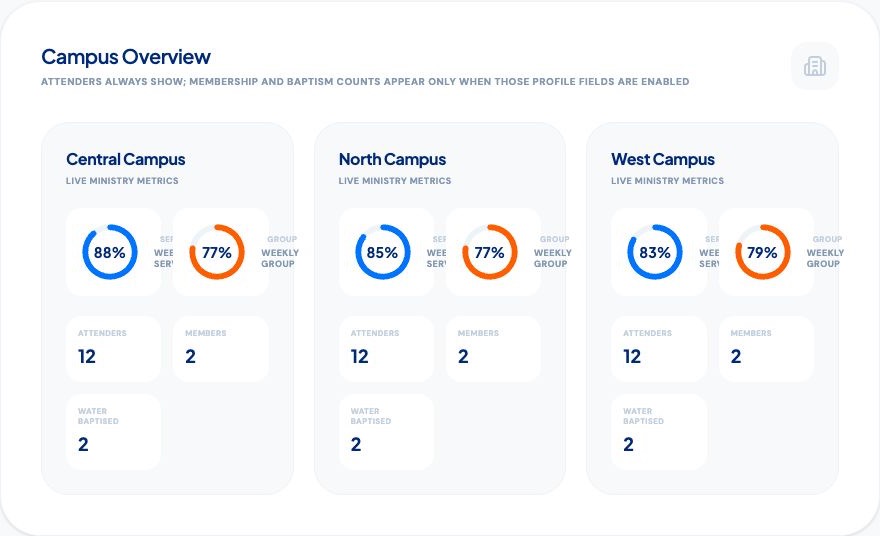
Useful signals include open care actions, people needing attention, attendance changes, missing reports, active alerts and leader feedback. These signals help a senior leader ask better questions. They should not become automatic conclusions about a person, group or leader.
Connect to the church system you already use
Many churches already keep people, groups and campuses in a church management system. Re-entering those records creates duplicate work and inconsistent data.
When evaluating pastoral care software, ask how it fits alongside your existing platform. My12 can use a Planning Center integration to bring core people, leader, group and campus structure into its care workflows.
The integration should reduce setup while preserving clear ownership. The church management system can remain the source for core records, while the care platform supports the ongoing ministry rhythm.
A pastoral care software evaluation checklist
During a trial, check whether the platform:
- helps leaders see who may need appropriate follow-up;
- makes care actions and ownership clear;
- connects prayer, attendance and care context responsibly;
- supports pastoral escalation without oversharing;
- limits access according to role and responsibility;
- works naturally on a phone for volunteer leaders;
- integrates with existing church records where needed;
- helps senior leaders support rather than monitor leaders;
- allows the church to export and manage its data;
- fits the church's privacy, safeguarding and retention policies.
Pastoral technology should strengthen human care
The best pastoral care software does not try to perform ministry on behalf of leaders. It helps them remember, coordinate and notice. It gives senior leaders enough visibility to support the church while keeping the actual response personal.
My12 was built around that balance. It connects people, prayer, attendance, care actions, life moments and leader health so churches can notice people before distance becomes disconnection. Read more about the wider church care platform approach.